
Two-Factor Authentication for Crypto Betting Accounts
 Available in AU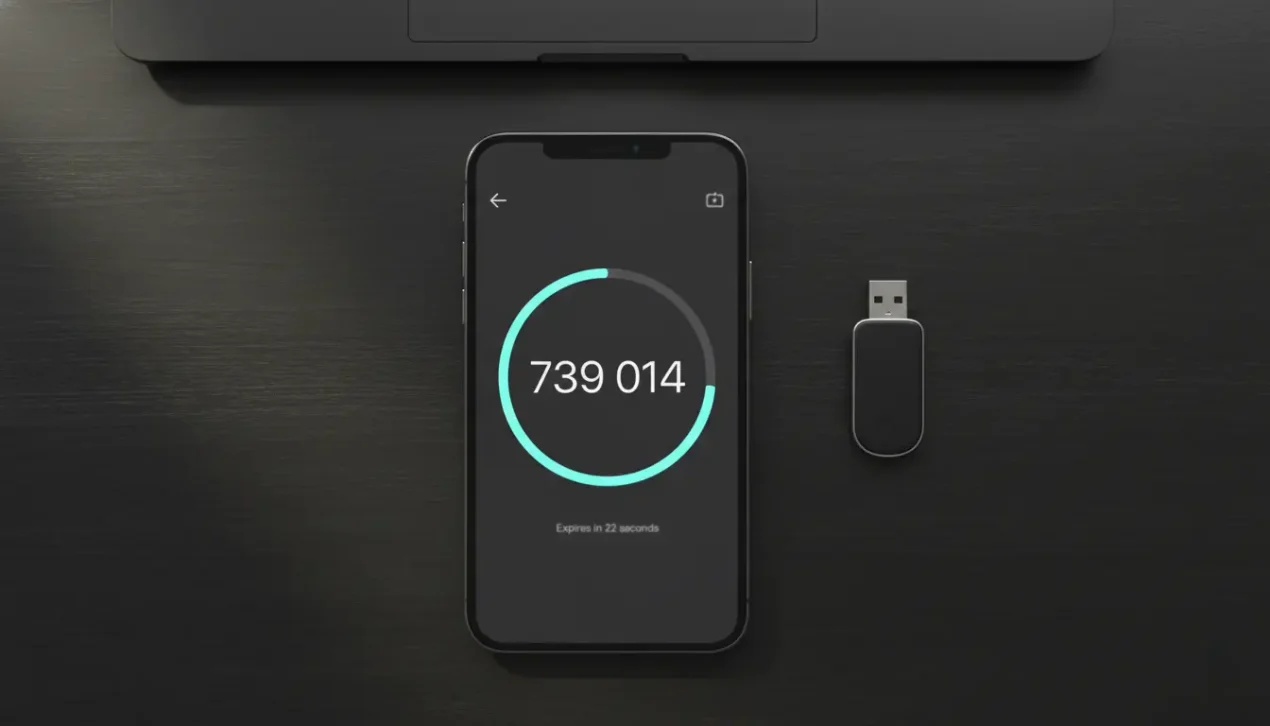
Why 2FA Is the Single Cheapest Win for a Bettor
A Melbourne reader told me a story a few years ago about losing 0.12 BTC from his sportsbook account overnight. He’d reused his email password from a shopping site that had been breached, didn’t have 2FA enabled on the sportsbook, and an attacker had logged in, placed stake-and-fold bets to clean out the balance through the book’s withdrawal rails. Total setup time that would have prevented the loss: about 90 seconds with a free authenticator app. Cost of omission: 0.12 BTC.
This is the pattern I’ve watched repeat maybe two dozen times over nine years. The specific attack varies — credential stuffing, phishing, malicious browser extensions — but the outcome is the same. The account without 2FA is the low-hanging fruit that attackers pick first, and the account with decent 2FA is the one they skip in favour of an easier target. You don’t need military-grade security. You need to not be the easiest target in the room.
Industry-wide, the crypto-gambling platform adoption of AML and KYC protocols has risen to around 48 per cent in 2025, with a projection that 95 per cent of platforms will have some form of compliance tooling by the end of that year. Account-security tooling has tracked a similar upward trajectory, though it lags behind AML adoption. As operators upgrade their platforms, 2FA support has become almost universal; the gap is now mostly on the user side, where many bettors still haven’t enabled it.
The wallet side is covered in self-custody wallet setup.
TOTP, SMS, Email and Hardware Keys Compared
Different 2FA mechanisms have different security properties, and the differences matter. Here’s the honest ranking from strongest to weakest, with what each actually protects against.
Hardware security keys (FIDO2/WebAuthn). A physical device that signs a cryptographic challenge to prove possession. Phishing-resistant because the device verifies the domain it’s authenticating against — a phishing page cannot receive the authentication response. Compromise requires physical theft of the device, which is vastly harder than remote attacks. Adoption at crypto sportsbooks is growing but still uneven; a few major operators support WebAuthn, many don’t.
Passkeys. A newer device-bound cryptographic credential that syncs across the user’s Apple or Google ecosystem. Phishing-resistant for the same reasons as hardware keys. Supported by all modern browsers and OSes. Crypto sportsbook adoption is early but accelerating — I expect passkeys to become the default within 2-3 years on serious operators.
Time-based one-time passwords (TOTP) via authenticator apps. A shared secret between the server and the user’s authenticator app generates 6-digit codes that change every 30 seconds. Vulnerable to phishing — if you type your TOTP code into a phishing site, the attacker can relay it to the real site within the 30-second window. Not vulnerable to SIM swapping, credential stuffing, or most remote attacks. This is the current sweet spot of security versus convenience for most users.
Email-based 2FA. A code is emailed to your registered address, you copy it into the login. Secure if and only if your email account itself is protected by strong 2FA. If your email is weaker than your sportsbook account, email-based 2FA is the weakest link and defeats the purpose. This method is common on less sophisticated operators and should generally be avoided unless you’ve hardened your email with its own strong 2FA.
SMS-based 2FA. A code is sent via text message to your registered phone. Vulnerable to SIM swapping attacks — an attacker who socially-engineers your telco can get your number ported to a new SIM and receive your 2FA codes. SIM swap attacks against high-value crypto users have been documented repeatedly and are the reason major crypto exchanges phased out SMS 2FA over 2019-2022. Some sportsbooks still offer it; treat it as marginally better than nothing but meaningfully worse than TOTP.
The practical recommendation: if your book supports hardware keys or passkeys, use them. If not, use TOTP via an authenticator app. Avoid SMS unless it’s the only option. Avoid email unless your email is itself hardened.
How Attackers Actually Target Crypto Betting Accounts
Understanding the attack playbook helps you understand why specific defences matter. The attacks I see most in the space, roughly in order of prevalence, follow recognisable patterns.
Credential stuffing. Attackers buy or leak databases of email-password pairs from breached sites, then try each combination across dozens of sportsbooks automatically. Users who reuse passwords across sites are the primary victims. Defence: unique passwords per sportsbook, and a password manager to make that feasible. Credential stuffing alone is defeated by a unique strong password; 2FA is an additional layer beyond that.
Phishing pages. A fake sportsbook login page is hosted on a typo-squatted domain or accessed via a poisoned search result. User enters username, password, and TOTP code. The fake site relays all three to the real site within the 30-second TOTP window and gains access. Defence: check the URL before typing credentials; use hardware keys or passkeys, which verify the domain cryptographically and cannot be phished in the same way.
Malicious browser extensions. A user installs an extension that looks legitimate and silently logs keystrokes, intercepts authentication cookies, or injects malicious scripts into sportsbook pages. Defence: minimise installed extensions, review permissions carefully, use a separate browser profile or device specifically for sportsbook activity.
SIM swapping. Attackers socially-engineer a telco into porting the victim’s phone number to an attacker-controlled SIM, then receive SMS 2FA codes. Defence: don’t use SMS 2FA on anything holding meaningful value; add a port-freeze or PIN on your telco account to make social engineering harder.
Email compromise. Attackers gain access to the user’s email account via any of the above methods, then trigger “forgot password” resets on sportsbook accounts to receive the reset links. Defence: protect email with strong 2FA itself, ideally hardware keys or passkeys. Your email is the master key to most of your other accounts; treat it that way.
Support social engineering. Attackers contact sportsbook support impersonating the user, provide enough account details to seem legitimate, and trick the support agent into resetting 2FA or authorising withdrawals. This is rarer but has been documented against high-value accounts. Defence: use a unique email for each sportsbook that isn’t publicly linked to your identity, and check whether your operator allows a custom security phrase or additional verification requirement on account changes.
Recovery Paths That Do Not Break Your Security
The problem with strong 2FA is that losing the second factor can lock you out of your own account as thoroughly as it locks out attackers. Recovery mechanisms need to balance security against usability, and the wrong recovery path creates a weakness that defeats the 2FA in the first place.
Backup codes. When you enable TOTP, the sportsbook typically generates 10-20 single-use backup codes. Print them, store them securely offline — ideally in a fireproof box alongside other critical backups — and don’t photograph them or save them digitally. If you lose access to your authenticator app, the backup codes let you log in and re-establish 2FA. Used-once, so they can’t be stolen and used repeatedly if compromised.
A second authenticator app on a different device. Some users set up TOTP on both their phone and a tablet or a secondary device, with the same QR code scanned into both. This means the loss of one device doesn’t lock them out — they can use the other to authenticate and update. The tradeoff is that two devices doubles the attack surface; if one is compromised, the attacker has access.
Hardware key pairs. For hardware-key users, the pattern is to register two keys to each account — a primary used daily, a backup stored in a safe location. If the primary is lost, the backup gets you in. This is the preferred pattern for high-value accounts.
Recovery email. Most sportsbooks allow a recovery email as a last resort — a verified alternate address that can receive account-recovery links. This is only as strong as the recovery email itself, so protect that email with its own strong 2FA. For serious accounts, a recovery email should be one that isn’t used for anything else and is itself hardened. This recovery layer becomes especially important if you’re also setting up a wallet with its own recovery needs; my piece on setting up a self-custody wallet for sportsbook deposits covers the wallet-side recovery patterns in detail.
Support-based account recovery. As an absolute last resort, contacting support with ID documents and account verification details can reset 2FA. This process is manual, slow (typically days), and the human factor in it is the security weakness — support agents can be socially engineered. Some operators require video calls or additional verification for 2FA resets on high-value accounts.
What not to use for recovery: SMS to a phone you don’t control absolutely, email accounts you share with others, password managers with weak master passwords, or any mechanism that routes through a single point of failure you haven’t hardened.
Passkeys and What Crypto Books Are Quietly Adopting
Passkeys are the technology I expect to replace both traditional passwords and most 2FA over the next few years, and they’re already starting to show up at crypto sportsbooks in beta or early-access tiers.
The mechanism: instead of a password, you authenticate to the sportsbook using a cryptographic key pair generated by your device (phone, laptop) and protected by your device’s biometric or PIN. The private key never leaves your device. The public key is stored by the sportsbook. When you log in, the sportsbook sends a challenge; your device signs it with the private key after you authenticate to the device; the signed challenge goes back to the sportsbook. No password to steal, no TOTP code to phish, nothing for an attacker to intercept remotely.
The user experience is meaningfully better than traditional 2FA. Logging in is one biometric prompt, and it’s done. No copying codes between apps. No waiting for emails or SMS. No remembering strong passwords. The friction reduction is real and measurable, which is why adoption has been fast wherever it’s been rolled out.
The security properties are significantly stronger than TOTP. Phishing-resistant because the device verifies the domain. Credential-stuffing-resistant because there’s no reusable credential across sites. SIM-swap-resistant because there’s no phone number involved. Each passkey is tied to the specific site that issued it.
The caveats worth knowing. Passkeys sync across the user’s Apple or Google ecosystem, which means the security of the passkey depends on the security of the ecosystem account. An attacker who gains full access to your iCloud or Google account can potentially access your passkeys. Hardening those core accounts is the prerequisite for passkeys to deliver their full benefit.
The adoption landscape at crypto sportsbooks in 2026: a handful of major operators support passkeys in production. Several more have announced them as coming features. Most smaller operators are still on traditional password plus TOTP or SMS. If your book supports passkeys, enabling them is a strict security upgrade with a usability benefit thrown in. If it doesn’t, TOTP plus a strong unique password plus backup codes is the realistic target configuration.
Is SMS 2FA worse than nothing on a crypto sportsbook?
Not quite worse than nothing, but close. SMS 2FA defeats the simplest credential-stuffing attacks, which is a real benefit. It fails against SIM swapping, which is a documented attack against crypto users specifically. On balance, SMS 2FA is better than no 2FA but meaningfully worse than TOTP or hardware keys. If SMS is the only option your book offers, use it but push the operator to add better methods.
Can I use one authenticator app for my wallet and my sportsbook?
Technically yes, since each service generates its own TOTP secret and the app just stores them. The authenticator app is a secret manager, not a single point of failure unless you lose access to it entirely. Protecting the device and having proper backup codes for each service is what matters. Some users prefer separate apps for different risk tiers as an additional organisational defence, but it’s not a security requirement.
What is the safest recovery method for a 2FA-locked account?
Printed backup codes stored securely offline are the strongest method for TOTP users. For hardware-key users, a registered second key stored separately is the pattern. Support-mediated recovery should be the absolute last resort because it relies on human verification that can be socially engineered. Whatever recovery method you choose, test it before you need it — a recovery method you’ve never confirmed works isn’t really a recovery method.
Created by the "" editorial team.The wider context sits in our data-driven guide to Bitcoin betting.