
Setting Up a Self-Custody Wallet for Sportsbook Deposits
 Available in AU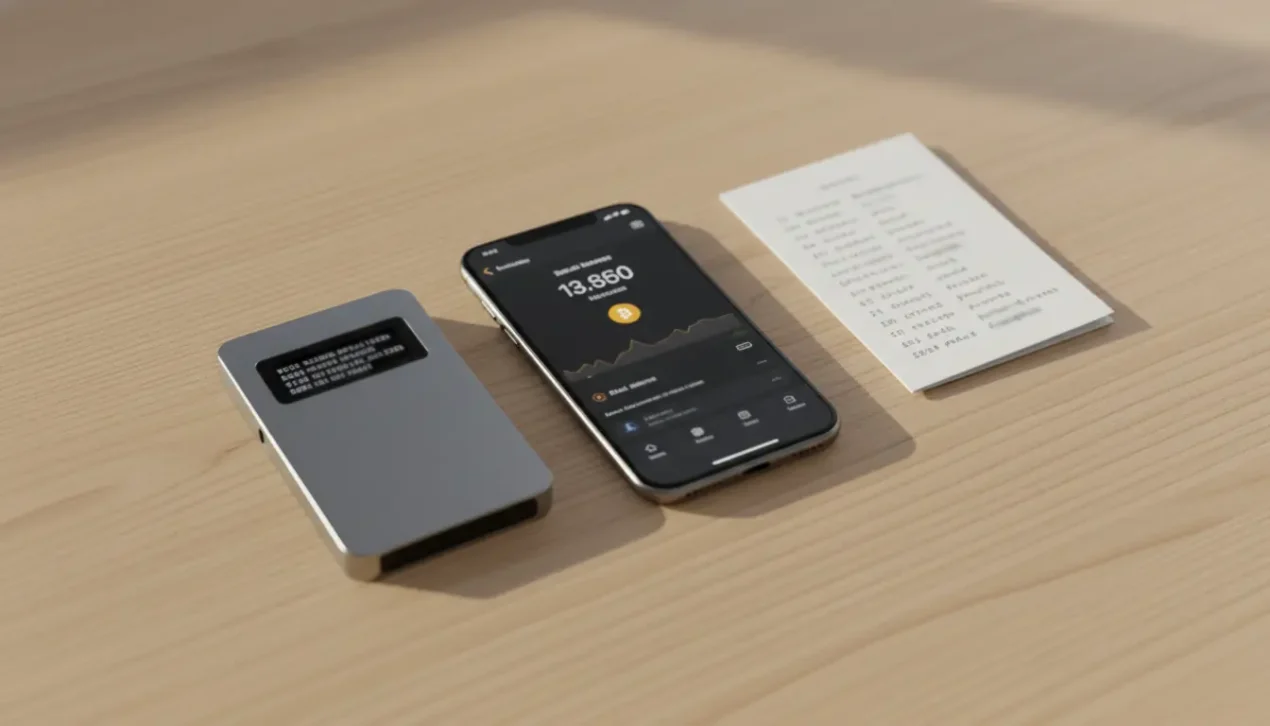
Why a Dedicated Betting Wallet Is Worth 10 Minutes of Setup
A reader emailed me last year with a story that still makes me wince. He’d been depositing to a crypto sportsbook straight out of his main trading wallet — the same one holding his long-term BTC stack. A malicious browser extension logged an address and, during a late-night football session, drained everything he’d been saving for four years. The sportsbook deposits weren’t the attack vector. The main wallet was. But the two had been joined at the hip, and that’s what made the loss total.
This is the entire argument for a dedicated betting wallet in one paragraph: your betting funds and your savings should live in different houses. Not different drawers of the same house. Different houses, with different keys, different devices, and different seed backups. The blast radius of any compromise is then bounded by what’s in the betting wallet, which should only ever hold what you can afford to lose at a sportsbook.
Ten minutes of setup saves you from a category of disaster that I’ve seen happen roughly a dozen times in my circle over nine years. It also forces a useful mental discipline — when you fund the betting wallet, you’re explicitly moving money into a play-money zone. That mental boundary matters. Punters who blur it tend to end up with problems that go well past the sportsbook.
Sending on the wrong chain is a real risk: wrong-network deposits.
Software, Hardware and Mobile: Matching the Wallet to Your Stakes
Three classes of wallet cover just about every scenario. The right choice depends on how much you typically keep in the thing and how frequently you top it up.
Software wallets on a desktop — think open-source clients you install on your laptop — give you full control, good transaction visibility, and the ability to connect to your own node if you’re that way inclined. They’re a solid fit for someone whose betting bankroll sits in the low four figures AUD and who moves funds a few times a month. Risk profile: if your laptop gets malware, your hot keys are exposed. Mitigation: keep the laptop clean, use a separate OS profile, and don’t install the wallet on the same machine you torrent movies on.
Hardware wallets are the gold standard once your betting bankroll gets serious. The seed and signing keys never leave the device; the laptop or phone only sees unsigned transactions. Two-factor authentication is structurally built into the flow because nothing ships without a physical button press. I use hardware for any stack above about A$2,000 in sportsbook deposits. The tradeoff is convenience — a hardware sign-off adds maybe 30 seconds per transaction, which matters if you’re depositing during a live market.
Mobile wallets sit in a middle ground. Modern mobile clients use secure enclaves and biometrics, which is genuinely stronger than most desktop setups. The practical issue is loss: phones get dropped in taxis, stolen from cafés in Surry Hills, and bricked by dodgy updates. A mobile wallet without a bulletproof seed backup is a ticking clock. I treat mobile wallets as an excellent bettor’s convenience tool for small, fast deposits — never as the primary store of anything.
One data point for context: roughly 64 per cent of crypto iGaming bets now happen on mobile devices, and by 2026 the projection is 80 per cent of crypto gambling volume will come from phones. That’s the scale we’re talking about. The infrastructure has to be mobile-capable, but “mobile-capable” doesn’t mean “store your whole bankroll on a phone you wave around at the pub.”
Seed Phrase Hygiene for a Betting Wallet
Your seed phrase is the only thing that actually matters. Lose it, you’re done. Let someone else see it, they’re you.
I write seeds down on paper, twice. One copy lives in a fireproof box at home. The other lives somewhere I can access if my home becomes inaccessible — a relative’s place, a bank deposit box, anywhere that isn’t burning down at the same time as the first copy. Never in a photo. Never in a text file. Never in a password manager. The moment a seed phrase touches any internet-connected device, it’s digitally compromised — that’s the threat model.
Metal backup plates are worth the A$80 once your bankroll justifies them. Paper survives fires less well than people think, and water even less well. I’m not saying everyone needs a titanium seed plate. I’m saying that if your seed is holding more than you’d be comfortable losing in a house fire, stamp it into metal.
Passphrase extension — the 13th or 25th word you add beyond the standard seed — is genuinely powerful and very easy to screw up. If you use one and forget it, the wallet is permanently empty even with the seed. For a betting wallet specifically, I tend to argue against passphrases. The marginal security benefit is small because the wallet shouldn’t hold that much anyway, and the added recovery failure mode is real. Save passphrase setups for cold storage and savings.
One more practical habit: test your backup before you trust it. Wipe the wallet, reinstall, and restore from the written seed. If the balance reappears, you’re good. If anything is off by a single word, you just caught it while there was still time. Do this on day one with a small amount of BTC. Do it again every time you change your backup storage.
Address Reuse, Labelling and Operator Compatibility
Two habits here will save you more headaches than any other setup tip. First, a fresh receiving address every time you withdraw from the sportsbook. Second, a consistent label scheme in your wallet so you can trace which deposit came from which session.
Address reuse on Bitcoin isn’t a vulnerability the way it is on some other chains, but it is a privacy leak. Every time you reuse an address, anyone watching the chain — and that includes the sportsbook’s compliance team, chain-analytics firms, and curious onlookers — links that activity together. For a self-custody wallet used for sportsbook withdrawals, reuse gradually builds a map of your betting behaviour that you didn’t consent to publishing. Modern wallets generate a new address per transaction by default; don’t disable this.
Operator compatibility is the subtler trap. Bitcoin has multiple address formats — legacy starting with “1,” nested SegWit starting with “3,” native SegWit starting with “bc1,” and the newer Taproot format also starting with “bc1p.” Most sportsbooks handle all four for deposits without fuss. A few older platforms still reject Taproot-format withdrawal addresses because their outgoing infrastructure hasn’t been updated. The easy fix: ask support which address formats they support for withdrawals before your first big payout. Finding out your book can’t send to your wallet after you’ve built up a balance is a bad day.
Native SegWit (bc1) is my default. Lower fees per transaction, wide support, and the format most sportsbook withdrawal systems are optimised for. Taproot is technically superior but adoption among sportsbook backends is still catching up.
Test Deposits Before You Commit Real Money
The single most embarrassing message I ever sent to a sportsbook support team was to ask where my 0.3 BTC deposit had gone. It had gone to the wrong chain. I’d copied a BEP-20 address when I meant a native BTC one, and I’d paid the price of being too confident to test first. Nine years in the industry. Still happened.
Test deposits are the cheapest insurance in crypto betting. Send 0.0001 BTC — about A$15 at current prices — to the sportsbook’s deposit address first. Watch it credit. Watch the balance update. Then, and only then, send the real amount. Every wallet I use has a “small test” workflow baked into my muscle memory, and it has saved me from two potentially catastrophic mistakes over the years.
The test should also check the return path. Once the small deposit lands, initiate a small withdrawal back to your wallet. This verifies that the sportsbook accepts your address format, that the withdrawal flow works, and that you haven’t accidentally been blacklisted for some reason the book doesn’t have to explain. A full round trip with pocket change proves the plumbing before you trust it with weight. If you’re worried about what happens when a test deposit goes to the wrong network, the recovery playbook gets its own treatment in my piece on wrong-network deposit prevention and recovery.
One final check: after your first successful round trip, write down the exact wallet software, version, and address format you used in a notes file. Six months later, when you come back after a summer off, you’ll thank yourself for the receipts.
Should I use my main trading wallet to deposit at a sportsbook?
No. A compromised browser extension, a phishing link clicked during a late-night session, or a malicious dApp connection can drain the wallet it touches. Keep betting funds in a dedicated wallet whose worst-case loss is limited to what you’ve put there for gambling. Your trading stack should never share a signing key with a site where you click ‘place bet’ under emotional pressure.
Is a mobile wallet safe enough for small weekly deposits?
Yes, provided the device is protected with biometrics and a strong passcode, the OS is current, and the seed is backed up offline. Mobile wallets using secure enclaves are structurally stronger than many desktop setups. The real risks are physical loss and theft, not software, so the backup discipline matters more than the wallet brand.
What address type should I pick for lower withdrawal fees?
Native SegWit addresses starting with bc1 produce smaller transaction payloads, which means lower miner fees on the sportsbook’s outgoing withdrawal. Taproot offers marginally better efficiency on some transactions but has patchier support among older operators. Legacy addresses starting with 1 are the most expensive and offer nothing modern you’d want.
Created by the "" editorial team.The wider context sits in our data-driven guide to Bitcoin betting.