
Mobile Bitcoin Betting: Apps, Web Wallets and UX on Small Screens
 Available in AU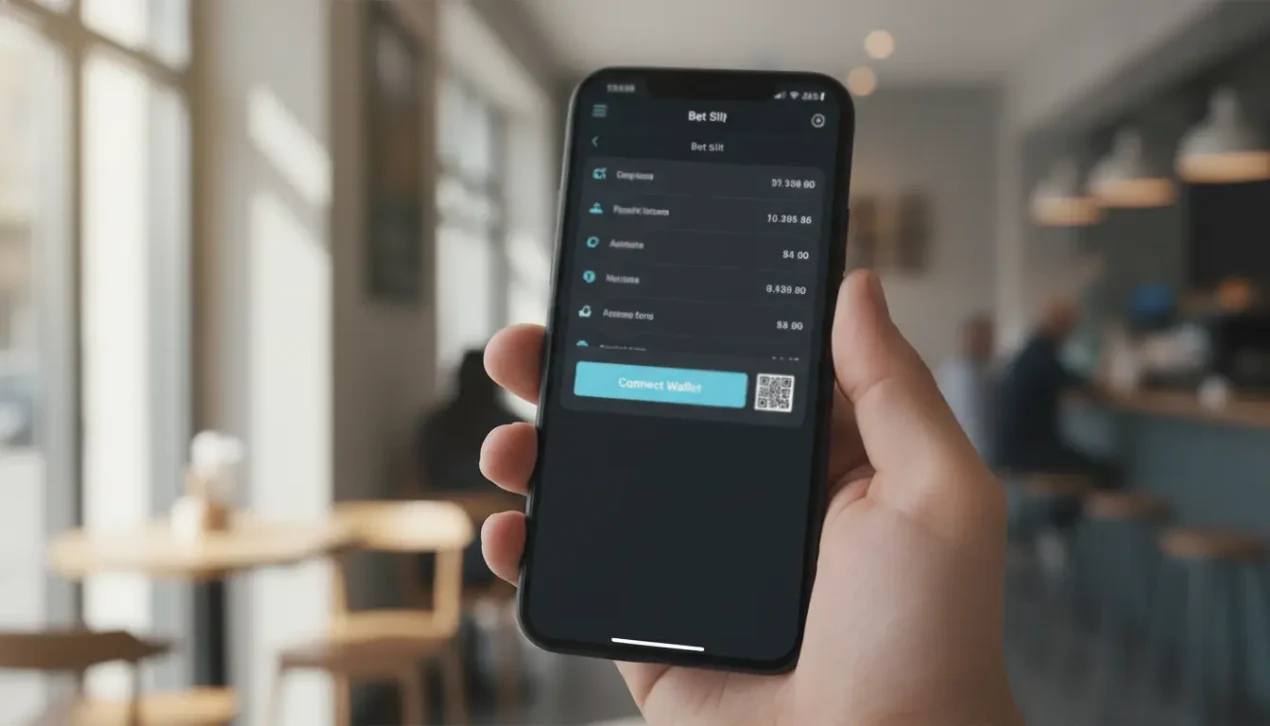
Why Most Bitcoin Bets Already Happen on Phones
If you’d told me in 2017 that most crypto sports bets would happen on phones within a decade, I’d have pushed back hard — the mobile tooling back then couldn’t handle wallet interactions without breaking. I was wrong. By 2023, roughly 64 per cent of crypto iGaming bets were placed on mobile devices, with another 32 per cent on desktop. The trend didn’t slow — by 2026 the projection is 80 per cent of crypto gambling volume will be mobile. That’s a consumer platform shift that every sportsbook I’ve watched in the last nine years has either adapted to or lost its audience over.
The demographic driver makes the trend inevitable. Crypto bettors skew younger — about 40 per cent of the audience sits in the 25-34 age bracket, another 35 per cent in 35-44, and 15 per cent are Gen Z aged 18-24. These are users whose first sportsbook experience was on a phone, whose first wallet was a mobile app, and whose idea of “using a computer” involves a 6.1-inch screen held in portrait. Desktop is increasingly a niche UX for this cohort.
The infrastructure has followed. Blockchain-gaming platforms are now mobile-first by design — about 73 per cent of blockchain games released in 2025 were built for phones first and desktop second. That’s a full inversion of the product-development flow compared to five years ago. The implication for sportsbooks is that mobile UX quality has become a survival issue rather than a nice-to-have.
Account security starts with two-factor authentication.
Native Apps, PWAs and App-Store Politics
Here’s a tension most punters don’t think about until they try to install a crypto sportsbook app: Apple and Google both have gambling-and-crypto restrictions on their app stores that make native distribution structurally hard.
Apple’s App Store allows gambling apps only in jurisdictions where the operator holds a recognised licence, which for offshore crypto sportsbooks serving a global audience usually means the app isn’t eligible for most App Store regions. Google Play has similar restrictions, with additional crypto-specific policies on what kinds of token interactions are allowed in-app. The practical consequence: most crypto sportsbooks don’t have genuine native apps in the iOS App Store or Google Play.
What they have instead are Progressive Web Apps — PWAs. A PWA is a website dressed up to behave like a native app. You visit the sportsbook’s URL in Safari or Chrome, tap “add to home screen,” and you get an icon on your phone that launches the site in full-screen mode with no browser chrome. From the user’s perspective, the experience is close enough to a native app that most punters don’t notice the difference. From the sportsbook’s perspective, the PWA bypasses the App Store restrictions entirely.
PWAs have real drawbacks. They can’t use the device’s hardware as deeply as native apps — no direct biometric API on some platforms, weaker push-notification support, no offline mode in most implementations. Performance on complex live-betting UIs is a step behind what a native app would deliver, though the gap has narrowed since iOS adopted better PWA support around 2023.
Some books do have native apps, typically distributed through sideloading on Android or through TestFlight-equivalent enterprise channels on iOS. These involve extra trust steps — you’re installing code outside the normal app-review pipeline — and security-conscious users should avoid them unless the book has established credibility. The PWA route is structurally safer because the code runs in the browser sandbox.
Wallet Handoff on Mobile: Deep Links and QR Codes
The most friction-prone step in mobile crypto betting is moving between the sportsbook app and the wallet app. Here’s how it actually works when it works well.
Deep links are the cleanest path. You tap “deposit” on the sportsbook, the sportsbook invokes a URL scheme that your wallet app has registered for, and the wallet app opens directly to a pre-filled send screen with the sportsbook’s deposit address and the amount. You confirm with a biometric, the transaction signs and broadcasts, and the wallet returns you to the sportsbook. Well-implemented deep-link flows take about 8 seconds end to end.
QR codes are the fallback when deep links fail or when you’re moving funds across devices. The sportsbook displays a QR code encoding the deposit address (and sometimes the amount as part of the URI). You open your wallet’s camera scanner, point at the screen, and the address populates. This is slower than a deep link and more error-prone — camera misreads do happen, especially on small or damaged screens — but it’s universally compatible and doesn’t depend on wallet app registration.
Lightning invoices work similarly on mobile, with the added wrinkle that invoices expire. A Lightning invoice displayed as a QR code typically has a validity window of 60 seconds to 10 minutes. If you scan, hesitate, and go back to complete later, the invoice may have already timed out. Generate, scan, pay, done — don’t pause in the middle. For the full treatment of how Lightning behaves in practice, I’ve written it up in the piece on Lightning Network betting.
The failure mode most punters encounter: the wallet app and the sportsbook PWA are both on the same phone, and the handoff breaks because the PWA can’t directly trigger the wallet app the way a native app could. The workaround is manual — copy the address from the sportsbook, switch apps, paste into the wallet. It works but it’s three extra taps and creates clipboard-hijacking risk on compromised devices. Clipboard malware that swaps pasted addresses for attacker addresses has been documented on Android specifically; always visually confirm the first six and last six characters of the address match what the sportsbook showed you.
Biometric Auth: Convenience, Risk and Recovery
Biometric authentication is the reason mobile betting feels faster than desktop betting. Face ID or fingerprint replaces typing a password for every session. The UX benefit is obvious. The security tradeoffs are subtler.
Done right, biometric auth on a sportsbook is a second factor after a strong password — not a replacement for it. The biometric unlocks the device’s secure enclave, which holds a stored credential that authenticates the session. If your phone is stolen but locked, the attacker can’t log in without your biometric. If your phone is unlocked and in your hand, the sportsbook app will trust the local biometric prompt — which is the whole point.
The specific risks worth flagging. Face ID on iOS requires attention (your eyes have to be open and looking at the phone), which blocks the simple “unlock phone while you’re asleep” attack. Fingerprint on most Android implementations doesn’t have the same attention requirement, which is a trade-off. Both biometric systems have a fallback to passcode, which means a shoulder-surfer who watches you enter your passcode has a path around the biometric.
Recovery is where people get hurt. If you lose your phone and haven’t set up account recovery at the sportsbook, the biometric that “was” your auth is now gone. Recovery typically requires email access, original KYC documents, and sometimes manual contact with support. Before anything else on a new sportsbook account, confirm that you know the recovery path and that the recovery path doesn’t rely solely on the device that just got lost.
The practical rule: biometric is great for convenience during a session, but always set up a strong password and a meaningful 2FA method independently. Don’t let biometric be the only thing between the attacker and your balance.
Mobile UX Pitfalls That Cost Real Stakes
Mobile betting introduces UX failure modes that desktop betting doesn’t have, and every one of these has cost punters real money — my own included, at various points.
Fat-finger stake errors. On a desktop you type your stake; on mobile you tap a keypad or scroll a slider. Off-by-one-zero mistakes happen, and they happen under time pressure during live markets. Confirmation screens help, but UX-aggressive books minimise confirmations to maximise click-through. Develop the habit of reading the stake number on the confirm screen, not assuming you entered it right.
Accidental cash-out. The cash-out button is often placed where your thumb naturally rests when reading the live-odds page. I’ve seen punters accept a cash-out at 0.7× their stake because they scrolled and missed the button location change. Disable the one-tap cash-out if your book allows it.
Session persistence. Mobile apps and PWAs stay logged in indefinitely by default, which means an unlocked phone left on a table is an open sportsbook account. Set a short session timeout in the book’s settings, even if the default is “remember for 30 days.”
Network flakiness. Live betting on unreliable mobile data is a losing proposition. If your connection drops between “I clicked place bet” and “confirmation received,” you have no way to know whether the bet landed. The book may eventually show the result, but the 30-second window of uncertainty is where panic-betting starts. Betting on 5G in your living room is fine; betting on 3G at the pub with four bars of service is operationally hostile.
Notification fatigue. Enable only the notifications that actually matter — bet results, withdrawal confirmations. Promotional notifications from sportsbooks are designed to pull you back into betting during moments when you’d otherwise be doing something else. The promotions aren’t always bad, but the notification channel is a gambling-frequency accelerator. Turn off what doesn’t serve your actual betting.
Are there any crypto sportsbook apps in the official app stores?
Very few, and those that exist are usually geographically restricted to jurisdictions where the operator holds a local licence. The major offshore crypto sportsbooks almost universally distribute via Progressive Web Apps rather than native app-store listings. If you’re promised an iOS or Android app in the App Store or Google Play from an offshore crypto book, check the listing carefully — fake clones of real sportsbook brands have appeared in the stores, and installing one is an active risk.
Is Face ID safe enough for a sportsbook session?
As a convenience layer on top of a strong password and a real 2FA, yes. As the only thing between an attacker and your funds, no. The risk isn’t really spoofing Face ID — that’s very hard — it’s an unlocked phone in the wrong hands, or a passcode fallback that’s easier to compromise than the biometric itself. Treat Face ID as a speed-up for convenience, not as a security upgrade.
Why do my live bets lag more on mobile data?
Because the live-odds stream depends on a persistent WebSocket connection, and mobile data networks drop connections more aggressively than WiFi. When the stream disconnects and reconnects, you get stale odds for a few seconds while the client catches up. Books that handle this well show a ‘reconnecting’ indicator; books that don’t will silently serve you 10-second-old prices. If you’re serious about live betting, do it on reliable WiFi where possible.
Created by the "" editorial team.The wider context sits in our data-driven guide to Bitcoin betting.