
Lightning Network Betting: Instant BTC Deposits and Withdrawals, Explained
 Available in AU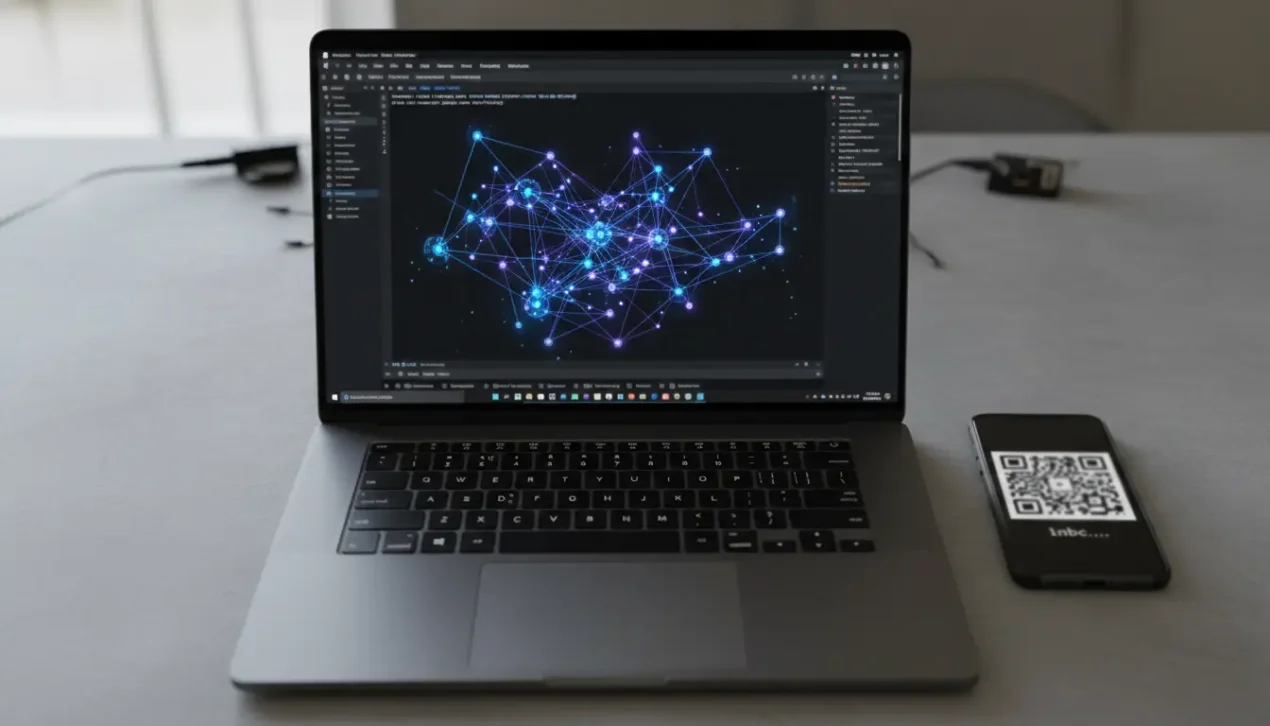
Why Sportsbooks Started Running Lightning Nodes
Back in 2019 I watched a punter in a Melbourne pub try to top up his sportsbook account with on-chain BTC during a live NRL match. By the time the first confirmation arrived, the quarter was done and his edge was gone. That single coffee-length wait is the reason sportsbooks started paying engineers to run Lightning nodes. It wasn’t ideology. It was the fact that live betting dies the moment your settlement rail takes eleven minutes.
Lightning Network isn’t a separate cryptocurrency — it’s a second layer sitting on top of Bitcoin that lets two parties exchange small amounts almost instantly, with fees measured in single satoshis rather than dollars. For a sportsbook, that solves a structural problem: the mainchain is excellent at large, final settlement, and terrible at the tempo of in-play wagering. Every operator I’ve worked with over the last nine years has eventually been pushed to the same conclusion — if you want crypto bettors to stay for live markets, you need a Lightning pipe.
The numbers back the shift up. Lightning’s public channel capacity has grown to roughly 5,000 BTC, a 384 per cent jump since 2020, across about 16,000 nodes and 75,000 active channels. That’s enough plumbing to handle serious sportsbook flow, and it’s why running a custodial node has quietly become table stakes for any crypto book that’s serious about live and micro-stake markets.
On the main chain it is slower: withdrawal speed and fees.
Channels, Invoices and Why Your Sat Arrives Instantly
Here’s the mental model I use when someone asks me how this works without their eyes glazing over. Imagine you and a mate run a bar tab. You don’t hand over cash every drink — you settle up at the end. Lightning channels are that tab, except it’s mathematically impossible for either of you to cheat, and either of you can close it whenever you like. Your sats move instantly between you because nobody’s waiting for a miner to write it down.
Technically, a channel is a two-of-two multisig address funded by an on-chain transaction. Once the channel is open, both parties update a local balance sheet every time they transact. The blockchain never sees individual payments — it only sees the opening and closing states. Between those two events, you can exchange millions of micropayments, each confirmed in under a second.
When you deposit to a sportsbook over Lightning, the book generates a Lightning invoice — a string starting with “lnbc” that encodes the exact amount, a payment hash and a short expiry. Your wallet reads the invoice, finds a route through the network (its channel to some hub, that hub’s channel to another hub, and so on until it reaches the book’s node), and forwards the payment along that path. Each hop locks a hashed secret. When the destination reveals the secret to claim the sats, that reveal propagates backwards along the route and everyone releases their lock. The whole thing usually finishes in under two seconds.
The fee is genuinely tiny. I routinely see Lightning transfers clear for under ten satoshis — that’s roughly a fraction of a US cent at current prices. Compare that to mainchain BTC fees that can spike into the tens of dollars during mempool congestion, and you understand why sub-A$20 deposits only make economic sense over Lightning. Under a few cents of friction, the UX feels closer to tapping a bank card than to sending crypto.
Network Capacity and the Hidden Limits on Your Withdrawal
Let me kill a myth right now: Lightning is not infinite. I’ve had readers message me in a panic when a sportsbook rejected a 0.5 BTC Lightning withdrawal as “insufficient capacity,” and they assumed the book was scamming them. It wasn’t. It was the network.
Public channel capacity across Lightning is large in aggregate, but that’s exactly what it is — an aggregate. What actually matters for your withdrawal is the capacity available along a routable path from the sportsbook’s node to your wallet’s node at that exact moment. Channels are directional — a channel can hold plenty of BTC on the book’s side and almost none on yours, meaning you can pay the book easily but they can’t pay you.
In practice, most sportsbooks cap Lightning withdrawals at somewhere between 0.05 and 0.2 BTC per transaction, and they’ll often split larger payouts into multiple Lightning transfers or push you to on-chain for anything above the cap. This isn’t laziness — it’s a rational response to the fact that routing a large payment through a network of small hops has an exponentially rising failure probability. A 2 BTC Lightning withdrawal is theoretically possible and practically painful.
There’s also a subtler limit — channel balance on the bettor side. If you’re receiving, your inbound liquidity has to be at least as large as the incoming payment. New wallets have zero inbound liquidity until somebody opens a channel to them. Some custodial Lightning wallets handle this for you invisibly. Self-hosted node operators have to think about it every time.
Betting at the Satoshi Level
This is the part of Lightning betting that genuinely changes behaviour, and it’s the part most articles gloss over. Mainchain BTC can’t economically move a 100-sat stake. The fee would eat the bet. Lightning can, and that unlocks a class of wager that used to be impossible: the micro-bet.
I’ve watched a mate place 500-sat stakes (about 35 Australian cents at today’s rates) on in-play corner kicks across a Champions League match. Forty little wagers, each settled in under two seconds, each paid out in under two seconds. The total he put through was maybe A$14. Before Lightning, a book wouldn’t even let him open a market that small.
Crypto books have quietly rebuilt their minimum-stake floors around Lightning’s economics. On mainchain rails, a minimum bet of 0.0005 BTC was common because anything smaller got eaten by fees. Over Lightning, I’ve seen minimums drop to 1,000 sats and sometimes lower. That changes what kinds of markets are playable and who can afford to play them.
The implication for bankroll discipline is worth flagging. Micro-stakes feel like they don’t count. They count. Forty 500-sat bets is still a 20,000-sat risk, and if you’re tilting, that ladder climbs faster than you notice. I’ll revisit this when we get to live-betting discipline further down.
When Lightning Bets Fail and How to Recover
Lightning feels magical when it works and infuriating when it doesn’t. Failure modes I see most often, in order of frequency: routing failure (no path with enough liquidity), invoice expiry (you waited too long to pay), channel force-closure (the other party went offline mid-settlement), and the rare but real case of an HTLC stuck in limbo because a relay node crashed.
Routing failures are easy. Your wallet tells you “no route found” and your sats never left. Try again in thirty seconds with a different route, or shrink the payment size. Invoice expiry is similar — the invoice’s payment hash is dead, you generate a new one from the book, you try again.
The messier scenarios involve HTLCs. If a payment gets stuck mid-flight because a hop went offline, your sats are time-locked in a hashed contract that will eventually either complete or refund. I’ve seen this resolve in minutes and I’ve seen it resolve in days. The sats aren’t lost, but they aren’t spendable either until the HTLC times out or clears. Every competent sportsbook has a support playbook for this; the slow ones will tell you to wait, and they’ll be right.
If your sportsbook’s Lightning node is down, you want an on-chain fallback ready. Most books publish both a Lightning and a mainchain deposit address — use the mainchain one, pay the higher fee, and move on. Mixing Lightning problems with the need to place a live bet is how people end up angry on support tickets. If you’re curious about what happens in the other direction — when the mainchain withdrawal is the one taking forever — I’ve written up the full timeline in a separate piece on on-chain withdrawal speed and fees.
One thing that has surprised me over the years: Layer-2 solutions, Lightning being the most mature of them, are expected to cut crypto-gambling fees by around 90 per cent overall. That’s not a marketing claim — that’s the technical ceiling of how much cheaper settlement gets when you stop writing every transaction to a blockchain. The sportsbook that doesn’t eventually move live-betting flow to Lightning is leaving margin on the table.
Why does my Lightning withdrawal fail when the on-chain one goes through?
Usually a liquidity issue. Lightning payments need a routable path with enough capacity at every hop; on-chain withdrawals only need the sportsbook to sign and broadcast. If the book’s Lightning node can’t find a route to your wallet with the right balance, the transfer fails cleanly and you can fall back to on-chain. It isn’t a censorship move — it’s physics of the network at that instant.
Is betting via Lightning any more private than on-chain BTC?
Marginally, yes. Lightning payments don’t get recorded on the public blockchain, so chain-analytics tools don’t see them directly. But the sportsbook’s custodial node sees every sat that enters and leaves your account, and the liquidity graph can be mapped by researchers. Treat Lightning as quieter, not anonymous — especially on a book that KYCs withdrawals.
Can a sportsbook freeze a Lightning payout in transit?
Once the HTLC route is locked and the secret is revealed, no — the payment either completes or times out per protocol. What a book can do is refuse to generate the outgoing invoice in the first place, or cancel a pending withdrawal before it’s sent. A payment already in flight on Lightning is outside the operator’s control.
Created by the "" editorial team.The wider context sits in our data-driven guide to Bitcoin betting.