
Bitcoin Withdrawal Speed and On-Chain Fees at Sportsbooks
 Available in AU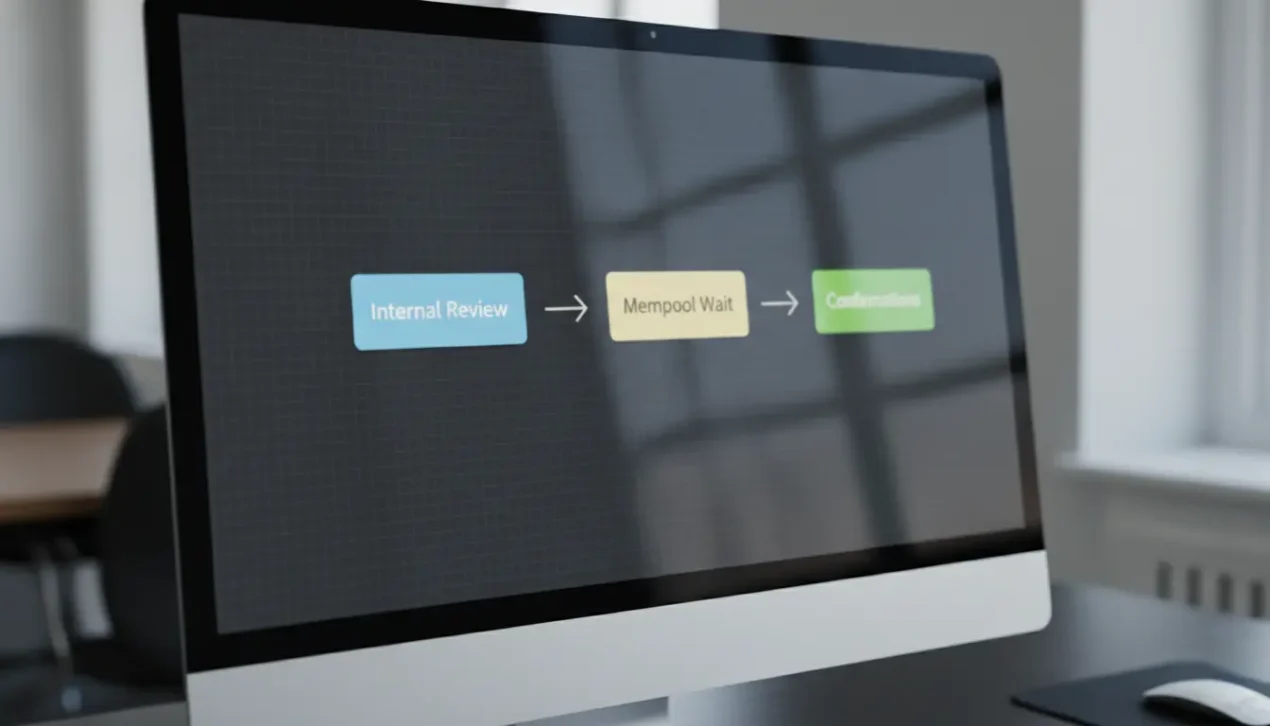
Why “Instant” Withdrawal Is a Marketing Word, Not a Number
Pull up any crypto sportsbook’s homepage and somewhere in the first scroll you’ll see the phrase “instant withdrawal.” I collected screenshots from 18 different books in 2024 and the word appeared on 17 of them. Actual withdrawal times, measured click-to-confirmed-on-chain, ranged from 2 minutes to 11 hours across those same 17 books. “Instant” is a marketing word that means “faster than a bank transfer,” which is a very low bar.
The shift of crypto betting towards more thoughtful, larger stakes — the average crypto bet grew 1.4× in 2024 while fiat stakes were flat — means withdrawal speed matters more, not less. A bettor putting A$300 through a crypto book and waiting 11 hours for a payout has paid a substantial opportunity cost on that time, even if the explicit fee was low. Understanding where the time actually goes lets you choose books sensibly and spot excuses for what they are.
The real withdrawal time is the sum of several discrete steps, each with different drivers, different variances, and different amounts of the book’s control. The sportsbook’s own processing window sits alongside the mempool’s congestion and the number of confirmations required before the funds are spendable on your end. “Instant” papers over all of this.
The instant route is the Lightning Network.
End-to-End Timeline: Click to Confirmed On-Chain
Let me break the withdrawal timeline into stages so you know what you’re waiting for at each point.
Stage one: internal review. You click withdraw. The sportsbook’s backend looks at your account, the amount, your KYC status, your recent activity pattern, and decides whether to approve the withdrawal automatically or flag it for manual review. Automatic approvals take seconds. Flagged withdrawals can take hours. First-time withdrawals on a new account, large amounts relative to your history, and withdrawals shortly after a big win are the most common triggers for manual review. This stage is entirely under the book’s control, and it’s where most of the variance between fast and slow books lives.
Stage two: hot wallet broadcast. Once approved, the sportsbook’s signing infrastructure constructs a transaction and broadcasts it to the Bitcoin network. This takes seconds at most. Some books batch multiple user withdrawals into a single transaction to save on fees, which adds a short queueing delay — more on batching in a moment.
Stage three: mempool wait. The transaction sits in the mempool waiting to be included in a block. How long depends entirely on the fee the sportsbook attached and the mempool’s current congestion. On a calm day, the next block takes about 10 minutes to mine, and well-fee’d transactions are included immediately. During a congestion spike, transactions with inadequate fees can sit in the mempool for hours or days.
Stage four: confirmation count. Your wallet shows the transaction once it has one confirmation (usually 10-30 minutes after broadcast), but most wallets and exchanges require 3 to 6 confirmations before the funds are spendable. For a sportsbook-to-personal-wallet withdrawal where the receiving wallet is your own, you often have access to the funds at 1 confirmation.
Adding it up: internal review (seconds to hours) + broadcast (seconds) + mempool wait (1 minute to an hour or more depending on fees) + confirmations (10 minutes to an hour for 1-3 blocks). Realistic total for a fast, well-run sportsbook during a calm network period: 15 to 30 minutes. Realistic total for a congested network with a cautious book: 2 to 6 hours. Lightning withdrawals where supported collapse this to seconds — Lightning’s public channel capacity has grown to roughly 5,000 BTC across about 16,000 nodes, enough throughput for most sportsbook flows under the sub-0.2 BTC per transaction ceiling.
What You Actually Pay: Network Fee vs Book Fee
There are two fees on a Bitcoin withdrawal from a sportsbook, and they’re often conflated in ways that serve the book and not the user.
The network fee is the miner fee on the Bitcoin transaction itself. It’s determined by the transaction size in bytes and the current mempool fee rate in satoshis per byte. A typical sportsbook withdrawal transaction is 200-300 bytes, and fee rates range from 1 sat/byte during calm periods to 100+ sat/byte during congestion. Current typical network fees for a single-input, single-output withdrawal range from A$0.50 on a calm day to A$30 during peak congestion.
The book fee is what the sportsbook adds on top. Some books pass through the network fee at cost and don’t charge anything extra. Others apply a fixed withdrawal fee regardless of network conditions — often A$15 to A$50 flat. Others use percentage-based fees on the withdrawal amount, which are usually worse than flat fees for large withdrawals. The worst pattern is “free withdrawals” that turn out to include a hidden conversion spread if the book converts your BTC balance to USDT internally before processing.
The Layer 2 alternative is where the economics shift dramatically. L2 solutions in crypto gambling are expected to cut fees by approximately 90 per cent compared to mainnet-only rails, and that reduction is mechanical — fewer on-chain writes per user transaction means lower per-user fee costs. Sportsbooks that have integrated L2 or Lightning for withdrawals pass most of the savings to users, because the competitive pressure forces them to.
My practical approach: for withdrawals under A$500, use Lightning if the book supports it and your wallet supports receiving. For A$500 to A$5,000, mainnet during off-peak hours (US evenings tend to have lower mempool pressure) makes the most sense. Above A$5,000, mainnet is the only serious option — Lightning’s per-transaction caps don’t accommodate it cleanly.
Batching: Why Your Withdrawal Waits for a Stranger
Most crypto sportsbooks batch withdrawals — combining multiple users’ payouts into a single on-chain transaction to save on network fees. This saves the book a lot of money. It can cost you some time, and the tradeoff is worth understanding.
A batched transaction has one input (the book’s hot wallet) and multiple outputs (each user getting paid). Instead of paying the fee for 20 separate transactions, the book pays a single slightly-larger transaction fee and distributes the savings. The fee saved per user is often 60-80 per cent versus unbatched processing.
The time cost is the wait for the batch to fill. Books typically run batches on a schedule — every 15 minutes, every hour, or on demand once the queue reaches a certain size. If you click withdraw 2 minutes after the last batch, you wait the full batch window. If you click 1 minute before, you go out immediately.
You can’t control the batch timing, but you can choose the books. Books that publish their batching schedule (or that don’t batch for VIP accounts) are more transparent about what you’re waiting for. Books that advertise “instant” while batching every 6 hours are being misleading. The quickest way to check: ask support what the typical batch interval is on your tier. A coherent answer in under 5 minutes is a good sign. A deflection about “it depends on factors” is a bad sign.
One consequence of batching: withdrawal transactions to multiple users appear together on-chain, which means chain analysis tools can cluster them. If privacy matters to you at withdrawal time, batching is a marginal leak — anyone watching the sportsbook’s hot wallet can see that 20 addresses were paid in the same transaction, which reveals rough timing of activity at the book even if specific amounts aren’t traceable to specific users. For most bettors this doesn’t matter. For privacy-conscious users, it’s worth knowing.
How to Realistically Speed Up a BTC Withdrawal
Some levers actually work, others are folk wisdom. Let me separate them.
Complete KYC before you need it. Large withdrawals frequently trigger KYC requests that can delay payouts by days if you haven’t already uploaded documents. Verify your account as early as possible — ideally before your first significant deposit. The overall trend here is towards more, not less, verification: about 48 per cent of blockchain-gaming platforms in 2025 had AML and KYC protocols specifically for higher-value transactions, and the number is rising.
Start with smaller withdrawals to establish a pattern. Books have risk-scoring systems that flag unusual patterns. A user who has withdrawn small amounts regularly looks less risky than one who deposits large amounts and then tries to withdraw the full balance in one shot. Behavioural smoothing is a legitimate way to move through the book’s risk filters faster.
Withdraw during the book’s business hours in their licensing jurisdiction. If the book is Curaçao-licensed, its compliance team’s business hours align with Eastern Caribbean time. Withdrawals clicked during those hours tend to clear the manual-review step faster than those clicked at 3am local time. This isn’t universal, but it’s directionally true at most offshore books.
Don’t split withdrawals artificially. Some users think that splitting a A$10,000 withdrawal into four A$2,500 pieces will bypass large-withdrawal review. It doesn’t — books have pattern-detection rules specifically for this — and it doubles your network fees and triples your waiting time for no benefit.
Use Lightning for small frequent withdrawals. Lightning withdrawal times are seconds rather than minutes, and the per-transaction fees are negligible. If you’re a frequent low-stakes bettor, Lightning is the infrastructure shift that changes your user experience the most.
For whale-sized withdrawals, the tactics are different — dedicated VIP desks, pre-notified payouts, different processing queues. I’ve unpacked the whale-specific experience in detail in the piece on high-roller Bitcoin betting. Whether you get access to those processes depends less on what you know and more on what you stake.
Why does my BTC withdrawal show as ‘processed’ but no TXID appears for an hour?
Usually because the book runs batching and your withdrawal has been approved internally but not yet broadcast to the network. The ‘processed’ status on your account means the book has debited your internal balance and queued the payment; the on-chain broadcast happens when the next batch runs. If a TXID hasn’t appeared after two or three hours during normal operations, that’s worth a support ticket. Under an hour is standard.
Do sportsbooks pass through real mempool fees or fixed ones?
Varies by book. The more transparent ones pass the network fee through at cost and charge a separate, disclosed book fee for the service. The less transparent ones use a fixed per-withdrawal fee that covers network costs plus their margin, and that fixed fee is often far above real mempool fees during calm periods. Ask support directly what the fee policy is — a clear answer is a trust signal, a vague answer is a warning.
Is there a minimum withdrawal size that quietly makes sense?
Practically yes. Below about 0.001 BTC (around A$60 at current prices), the book’s fixed fee plus the network fee can eat 10-20 per cent of the withdrawal. Above 0.01 BTC, the fee-as-percentage becomes negligible. If you’re trying to take out small winnings, either consolidate them over multiple sessions before withdrawing, or use Lightning where available to reduce the threshold.
Created by the "" editorial team.The wider context sits in our data-driven guide to Bitcoin betting.