
Bitcoin Betting in the United States: Legal Status State by State
 Available in AU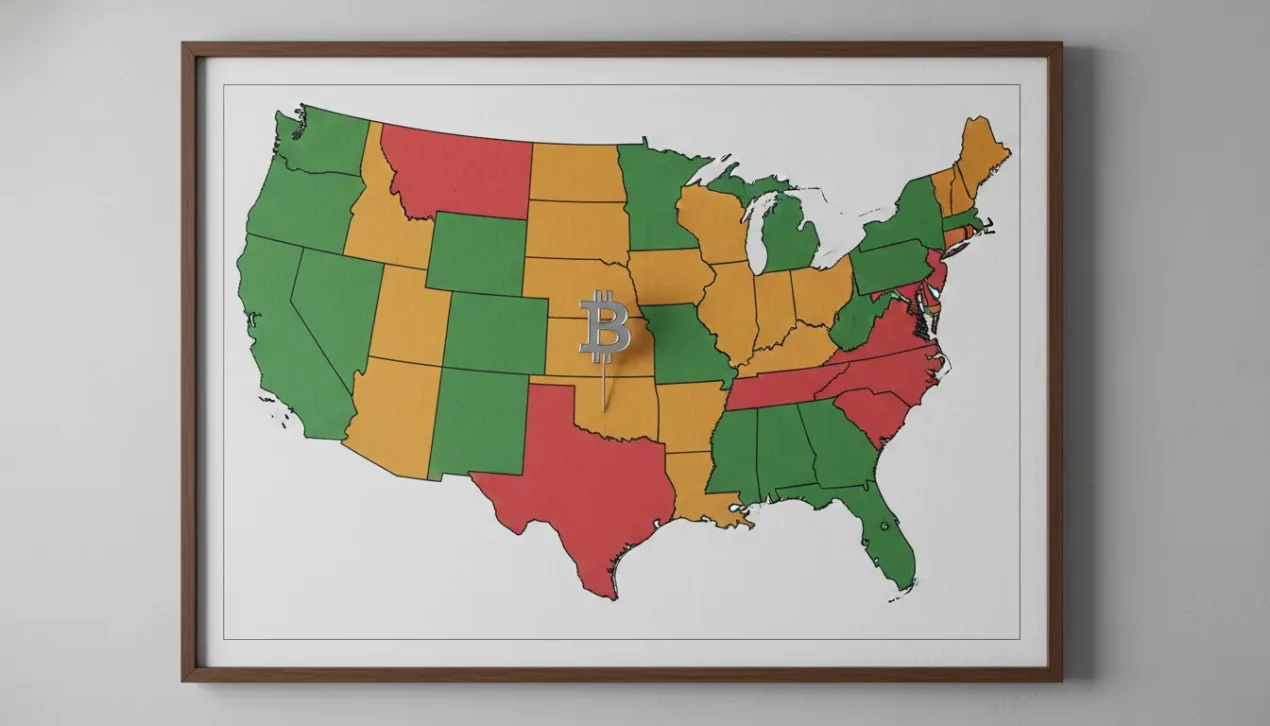
Why the US Is the Messiest Market for BTC Bettors
Every time a reader from the US asks me whether they can “just bet with Bitcoin,” I have to stop them mid-sentence. The question has no single answer because the US is fifty-one jurisdictions (fifty states plus DC), each with its own gambling regulator, on top of a federal layer that mostly doesn’t address crypto directly. The legal status of your specific bet, on your specific sportsbook, at your specific location, is a three-variable puzzle — and the answer can change between a Friday and a Monday if a state legislature acts.
What makes the US specifically messy is the historical sequence. Sports betting was functionally illegal in most of the country until 2018, when the Supreme Court’s Murphy ruling struck down the federal prohibition and handed the decision back to the states. Since then, states have been moving at wildly different paces — some legalised within a year, some still haven’t, and a few have actively prohibited online sportsbook operations. Crypto layered onto this evolving landscape creates an additional dimension the state regulators are still figuring out.
Across the global picture, the US consolidated its position as the dominant crypto-gambling market during 2025, while the UK overtook Canada to take second place. That scale alone guarantees that US regulators will keep sharpening their approach, and that the rules you read today might be updated next quarter. Treat every jurisdiction-specific claim in this article as a snapshot, not a permanent truth.
The global view is in is Bitcoin betting legal.
UIGEA and the Federal Overlay on Crypto Betting
The federal layer is surprisingly thin on sports betting itself but surprisingly thick on payment processing, which is where BTC gets relevant.
The Unlawful Internet Gambling Enforcement Act of 2006 — UIGEA — is the federal law that most affects online crypto betting. It doesn’t make gambling illegal; it prohibits financial institutions from processing payments to and from gambling operations that are illegal under state or federal law. That’s a critical nuance. UIGEA targets the payment channel, not the bet. A bank that processes a credit-card deposit to an unlicensed offshore sportsbook is potentially violating UIGEA. The individual bettor placing the bet usually isn’t.
This is why crypto specifically matters for US bettors. When the payment rail isn’t a bank, UIGEA’s enforcement leverage weakens. BTC withdrawals to a personal self-custody wallet don’t pass through a US financial institution at all; they pass through a blockchain. That’s not a loophole in the colloquial sense — it’s a structural gap between the statute and the technology.
What hasn’t changed: the Wire Act of 1961 still applies to sports-specific wagering transmitted across state lines. The Interstate Horseracing Act has its own carve-outs for horse wagering. The Professional and Amateur Sports Protection Act that used to prohibit state sportsbook legalisation was struck down in Murphy v NCAA (2018). Layered on top of these, the US Treasury’s Financial Crimes Enforcement Network regulates money-service businesses, which includes many crypto exchanges and some sportsbook payment processors.
The practical implication for a US BTC bettor: the federal government is overwhelmingly focused on operators, not on individual players. There’s no credible precedent for a federal prosecution of a recreational crypto sports bettor in the United States. Operators of offshore crypto sportsbooks serving US customers have been prosecuted under various theories; users of those sportsbooks have not. This isn’t permission; it’s a statement of enforcement reality.
State-Level Sportsbook Laws: Four Buckets
Rather than list all fifty-one jurisdictions — which would be stale by the time you read it — I’ll group states into four analytical buckets that capture most of the variation.
Bucket one: regulated and legal online sports betting with specific licensed operators. New Jersey, Pennsylvania, Colorado, Michigan, Arizona, and about 25 other states have legalised online sportsbook operations with state-licensed operators. These operators must hold a state licence, comply with state KYC rules, pay state taxes on gaming revenue, and cannot legally accept BTC as a deposit method in most of them. The bettor who uses a state-licensed sportsbook is covered by that state’s consumer-protection framework but is largely cut off from crypto-native books.
Bucket two: online sports betting legal but only through tribal operators. A handful of states including California (retail only, as of late 2025), Mississippi (retail only online via app on-premises), and Montana have restricted online sports betting to tribal gaming compacts. Crypto deposits are generally not accepted.
Bucket three: online sports betting illegal under state law, but unenforced against individual users. A larger group of states either actively prohibit online sports betting or have no legal framework that authorises it. In these states, bettors commonly access offshore sportsbooks, including crypto-native ones, and the state’s enforcement posture is almost entirely aimed at operators. Texas, California (for non-tribal online), and several Southern states sit in this category.
Bucket four: online sports betting explicitly legal and specifically hostile to crypto. A small but growing number of states have passed legislation that legalises sports betting and explicitly bans crypto deposits for sportsbook accounts. New York is the clearest example — licensed operators are prohibited from accepting cryptocurrency, and state enforcement actively targets any operator that does.
The four-bucket framework maps loosely onto another categorisation: where crypto betting is “neutral” (federal gap, state indifference), “hostile” (state enforcement against operators, little aimed at users), or “prohibitive” (state law targeting both operator and user). Most of the US is in the middle category.
Offshore Crypto Books and Real US Enforcement
Offshore crypto sportsbooks serving US users are operating in a grey-to-black zone by default. Understanding the enforcement reality is critical because it’s often misrepresented by both the operators (“totally legal!”) and the critics (“you’ll go to jail!”). Neither is accurate.
The enforcement actions I’ve tracked over nine years are consistent: operators get prosecuted, bettors almost never do. Operators of offshore books who advertise to US customers have faced federal charges — money laundering, wire fraud, UIGEA violations — and several have pled out or been extradited. The operators of major crypto-gambling platforms have been under active DOJ and FinCEN scrutiny, and in some cases have been fined or settled.
For individual bettors, the historical record is notable for its emptiness. I’m aware of no federal criminal prosecution of a recreational crypto sports bettor in the US for the act of placing a bet on an offshore book. State enforcement is similarly thin — occasional state-level attorney general actions against operators, but vanishingly rare actions against individual customers. This is not the same as saying the behaviour is legal; it is saying that the prosecutorial attention is almost entirely on the supply side of the market.
What is more plausible as a consequence for an individual bettor: tax complications, bank-level scrutiny of large crypto deposits and withdrawals, and the financial risk of the sportsbook itself failing or seizing funds. These are the real costs of using offshore crypto books, and they matter more than the vanishingly small risk of federal prosecution.
A related dynamic: arbitrage between licensed and offshore books is specifically where account bans and aggressive operator responses happen, and the risk profile looks different across those categories — I’ve written the arbitrage-specific angle in a separate piece on arbitrage across crypto sportsbooks.
What a US-Based BTC Bettor Actually Owes
The honest list of obligations a US bettor using crypto books actually takes on. None of this is advice; it’s a frame for the conversation with your own professionals.
Tax obligations are unavoidable. The IRS treats gambling winnings as ordinary income regardless of where the sportsbook operates, and BTC disposal events are subject to capital-gains treatment on top. The Tim Berners-Lee comment that’s circulated about crypto — his view that it’s “only speculative” and “obviously, that’s really dangerous” — gets quoted in defence of crypto scepticism, and while that’s a comment about crypto as an asset class rather than about betting specifically, it captures a regulatory temperament that’s been reflected in IRS guidance. Treat reporting as a baseline obligation, not an optional step.
Banking-level obligations are sneakier. US banks have increasingly sophisticated transaction-monitoring systems, and large crypto deposits or withdrawals associated with gambling-related addresses can trigger enhanced due diligence at your bank level. You don’t owe the bank any explanation for your legal economic activity, but the bank can close your account if it decides your pattern of transactions creates regulatory risk for them. I’ve seen this happen to otherwise-compliant US bettors.
State obligations vary. A California resident betting through an offshore crypto book is in a different position from a Pennsylvania resident using a state-licensed sportsbook. The state-specific rules apply to you based on your physical location at the time of the bet, which is why VPN use creates real legal complications rather than a clean workaround.
Operator-relationship obligations matter. The sportsbook’s terms of service are a contract you entered when you signed up. Violations — false location attestations, multiple accounts, structured deposits to evade limits — give the book grounds to freeze or confiscate your balance, often with enforceable clauses that wouldn’t survive scrutiny in a state-licensed sportsbook. Read the terms before you deposit, especially the section on prohibited jurisdictions and confiscation triggers.
Data-security obligations fall entirely on you. Offshore sportsbooks vary enormously in how seriously they take user data, and a data breach at a book in a jurisdiction with no mandatory disclosure laws may never be communicated to you. Use a unique password, unique email address, and strong 2FA for every sportsbook relationship. That’s not legal advice; it’s basic operational hygiene.
Can a US citizen legally deposit BTC to an offshore sportsbook?
The answer is jurisdictionally layered. No federal law criminalises the act of placing an individual bet on an offshore sportsbook. State laws vary — some states explicitly prohibit any online sports betting, others are indifferent, others have legalised but with crypto carve-outs. The realistic enforcement risk for an individual recreational bettor is low, but the activity is not affirmatively legal in most states. Talk to an attorney familiar with your state’s gambling law before assuming anything.
Has any state explicitly authorised BTC as a sportsbook deposit method?
As of 2026, none. Every state that has legalised online sports betting has either been silent on crypto (which usually means operators can’t accept it under state-licence rules) or explicitly prohibited it. The mainstream US regulated sportsbook market is fiat-rail only. If you’re betting with BTC from a US address, you’re almost certainly doing so through an offshore book that is not state-licensed.
Do tribal books accept Bitcoin anywhere in the US?
A very small number of tribal sportsbook operations have experimented with crypto-adjacent features, but broad crypto-native tribal books are not a mainstream option. Tribal gaming compacts generally define permitted payment methods in their state-tribe agreement, and crypto is rarely in the list. Expect tribal retail sportsbooks to stay fiat-only for the foreseeable future.
Created by the "" editorial team.The wider context sits in our data-driven guide to Bitcoin betting.